
OMG Mystery Bird’s Nest
Could it be the bobbin?
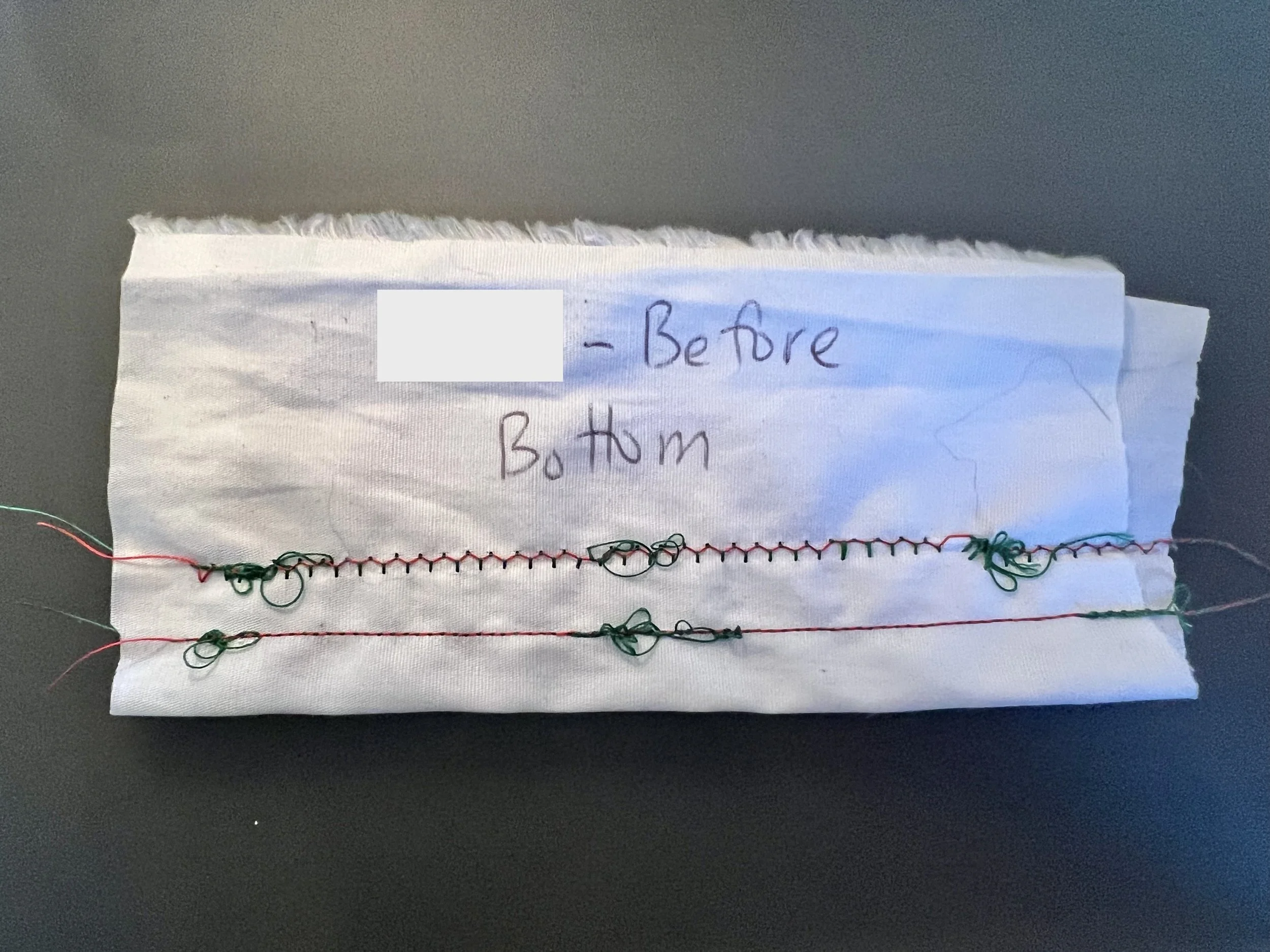
A test sew before a recent repair. The issue ended up being both a broken bobbin case and too much tension on the lower thread.
Is your sewing machine suddenly tangling thread, skipping stitches, or producing a mysterious nest underneath your fabric? After checking that your top thread is threaded correctly, the bobbin is often the next good place to look.
Bobbins are small, easy to overlook, and responsible for a surprising number of sewing machine issues. On the repair bench, they’re one of the most common sources of trouble—and fortunately, often one of the simplest to fix.
Let’s take a look at what a bobbin actually does, what can go wrong, and how to get things running smoothly again.
What does a bobbin do?
Sewing machines are, at their core, very committed to stabbing things in a precise and repeatable way. The bobbin is what makes that stabbing produce an actual stitch.
Your machine uses two threads:
The top thread (from the spool)
The bobbin thread (from below)
These threads interlock to form a stitch. The bobbin’s job is to deliver thread at the correct tension and timing so that each stitch forms cleanly and consistently.
When something goes wrong with the bobbin, the whole system falls out of balance.
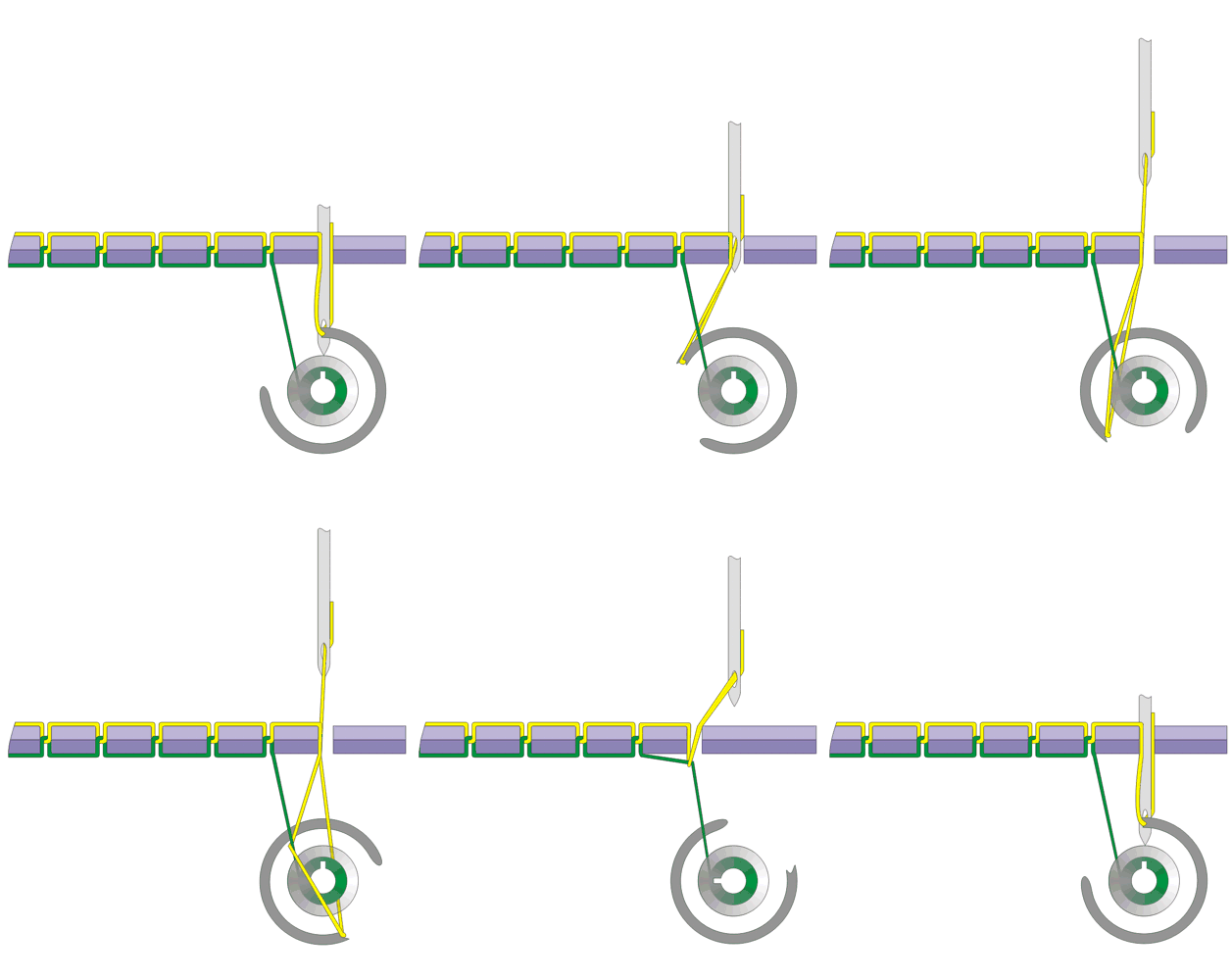
This is how the needle, bobbin, and shuttle all work together to create a lockstitch. Such a carefully choreographed dance. Hypnotic. Can’t stop watching.
Common sewing machine bobbin problems
If your machine isn’t behaving, here are a few common bobbin-related issues to check:
1. Tangled thread underneath fabric
This is one of the most frequent complaints:
“My sewing machine is making a bird’s nest underneath.”
Despite how it looks, this is often not a bobbin problem—it’s usually caused by the top thread not being threaded correctly.
That said, it’s still worth checking:
Is the bobbin inserted correctly?
Is the thread flowing smoothly?
2. Incorrect bobbin type
Not all bobbins are interchangeable, even if they look similar.
Using the wrong bobbin can cause:
uneven tension
rattling or noise
inconsistent stitches
Here’s a post about how to find your machine’s bobbin type!
If you’re still not sure, ask me!
3. Poorly wound bobbin
An unevenly wound bobbin can lead to inconsistent tension.
Look for:
loose or spongy winding
thread piling up unevenly
overly tight winding
A properly wound bobbin should be smooth and evenly filled—not lumpy, not stretched tight.
4. Lint buildup in the bobbin area
Ah, lint. The natural byproduct of all sewing and the quiet nemesis of smooth machine operation.
Lint can:
interfere with tension
block smooth thread movement
cause strange noises or resistance
A quick clean-out of the bobbin area can make a dramatic difference.
5. Bobbin tension issues
Bobbin tension is usually set at the factory and doesn’t need frequent adjustment—but it can drift over time or be affected by debris.
Signs of tension issues:
loops on the underside of fabric
uneven stitches
thread pulling too tight or too loose
If you’re unsure, it’s often better to have this adjusted during a service rather than guessing.
How to fix bobbin issues
If you’re troubleshooting at home, here’s a simple checklist:
Remove the bobbin and reinsert it correctly
Change to a fresh, new needle
Rethread the top thread completely
Check that you’re using the correct bobbin type
Wind a fresh bobbin evenly
Clean lint from the bobbin area
These small steps solve a surprising number of problems.
When to bring your machine in
If you’ve gone through the basics and your machine is still:
tangling thread
skipping stitches
or just not sounding quite right
It may be time for a deeper clean, adjustment, or timing check.
Sewing machines are intricate mechanical systems, and sometimes a small internal adjustment makes all the difference.
A note from the repair bench
At Stabby Machine, bobbin-related issues are one of the more common things I see—and one of the most satisfying to fix. I love a clean, well-balanced stitch!
With proper care, a good sewing machine can run beautifully for decades. Keeping the bobbin system clean, correctly set up, and well-maintained is a big part of that.
And yes—these machines may be enthusiastic little stabby devices. But when everything is working in harmony, they’re also remarkably precise tools.
Need help with your sewing machine?
If your machine isn’t stitching the way it should, I offer sewing machine cleaning, maintenance, and repair through Stabby Sewing Machine Repair.
Sometimes it’s a quick fix. Sometimes it’s a bit more involved. Either way, getting your machine running smoothly again is always the goal.
